
Rebuilding a Platform
Overview
During my tenure, the app evolved from a whiteboard concept to an efficient, high-performing platform that shipped over 2 million orders annually and growing. The platform managed orders from multiple third-party APIs and a client-facing store.
As the product designer for the engineering team, I owned the entire design process from ideation to validation for this platform. I drove initiatives, worked closely with my cross-functional partners. As the scrum Product Owner, I wrote the tickets and managed the development sprints.
TIMELINE
May 2018 – September 2021
ROLE
Lead Product Designer — user research, design, project management, scrum product owner
TEAM
Two Engineers
Product Designer (me)
TECH STACK
React and Go
Challenge – Version 1
Create and deploy a beta version of a complete rebuild of the print and ship software in 1 month. Refine to version 2 by the following month to be ready for the holiday season volume. Prioritize accuracy and efficiency. Consider role-based permissions, white labeling capabilities, and multiple facility locations.
User Need
Warehouse workers were struggling to complete orders on time.
Warehouse managers were having trouble tracking and hitting the SLAs.
Customer service had difficulty tracking and replacing orders.
Business Need
New seasonal contracts were in place based on daily SLAs. The old software did not support third-party API integration or the required volume of data.
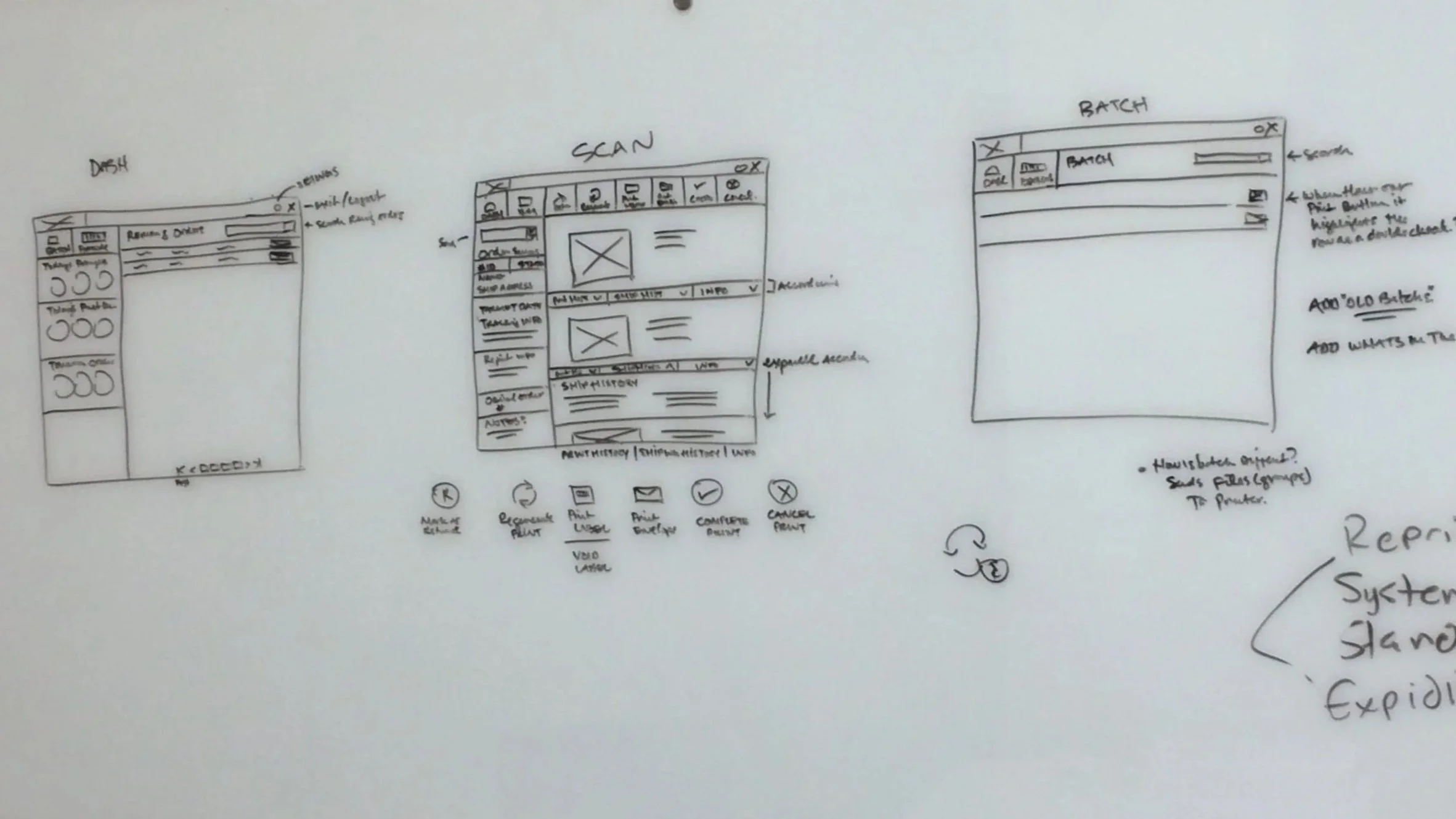
whiteboard of initial design
Outcome – Version 1
The deadline was met and it was released for the Fall holiday season. During the season, I collected user feedback with extensive field studies and full-team surveys.
Challenge – Version 2
Make it better!
User Need
The warehouse improved the SLAs to 80% but was having difficulty seeing the screens due to the colors not working with the lighting in the warehouse, and the text was too small to read at a distance. Initial assumptions were that the users were working right next to the screens, but it turned out that they were usually at least 3 feet away.
Business Need
New seasonal contracts were honored at a lower price due to the number of orders under the SLA. New agreements for the Spring holiday season required a 90% SLA.
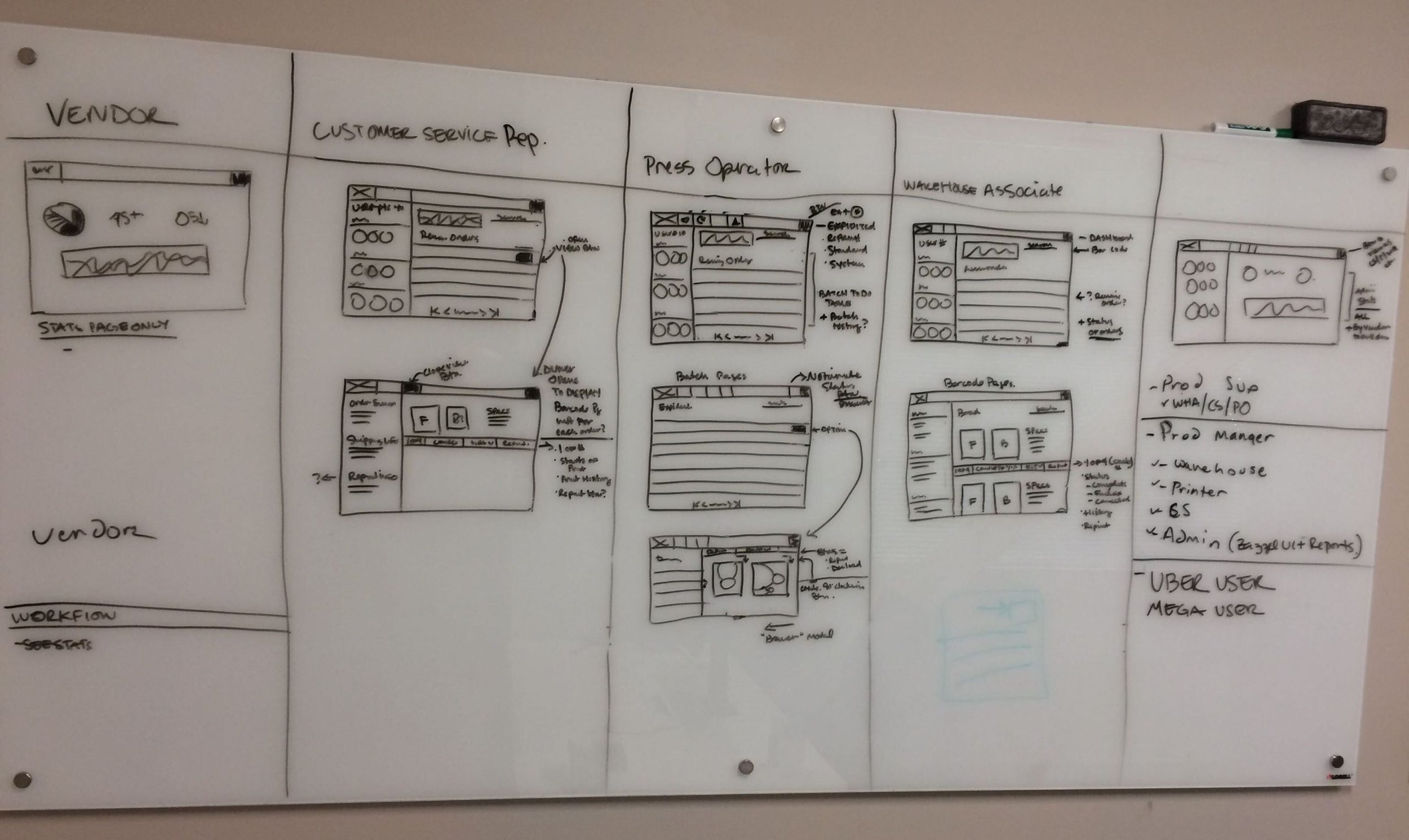
Mapping Out Permissions Levels
Outcome – Version 2
Efficiency improved to 85% but still needed to be above 90%.
Another round of field studies revealed that users could see the screen better, but still struggled with the warehouse lighting and the workflows required that the user put their scanner down to advance to the next step, which slowed them down.
Challenge – Version 3
Improve efficiency by reworking workflows and enhancing UI readability.
User Need
Users were still struggling to hit their SLAs.
Business Need
New seasonal contracts required 90% SLA and they were only hitting 85%.
Outcome – Version 3
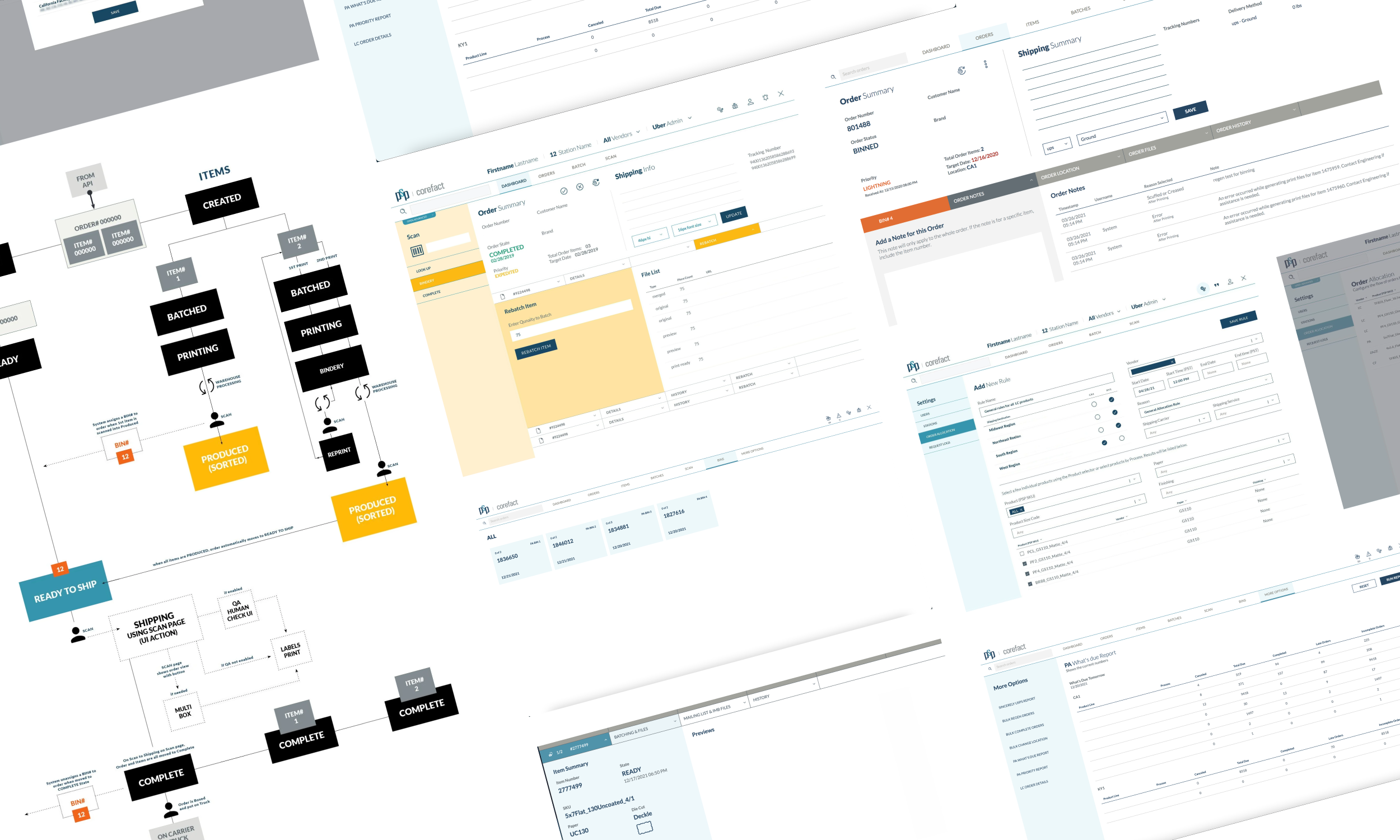
I reworked the UI and workflows, and the resulting SLAs ranged between 91% and 93%, hitting our goal of above 90%!
Further Initiatives
Over the next two years, I partnered closely with the COO, the two Facilities Managers, and the Head of Customer Service on over 40 product initiatives that enhanced the platform's efficiency and features. The following are some examples of these initiatives.
Order Allocation
When I joined the team, the company had one facility, but later expanded. To meet immediate needs, I worked with engineers to create a manual method for moving orders in the console, which evolved into bulk-moving tools and status reports that assisted warehouse team leads in managing their teams.
Outcome
Engineers are resourceful in finding the quickest solutions to problems, and sometimes these shortcuts can lead to significant results.
Reduce Short Shipped Orders
The fulfillment team encountered recurring instance of "short shipping" (sending fewer items than ordered). To tackle this, the Facilities Manager and I developed a "binning" system. This was achieved with numbered bins on physical shelving at each station, linked to digital bins in our app for tracking.
Outcome
As a result of these measures, short orders were reduced by approximately 20%.
Improve Accuracy
One of our third-party accounts faced a challenge matching die cut shapes of cards to printed envelopes. I drew each shape, added icons to print slips and order details, updated the QA final shipping screen, and created cheatsheets for the warehouses.
Outcome
These measures collectively helped both the veteran staff and the holiday seasonal employees enhance their accuracy rates by over 15% in both facilities.
Reduction Paper Usage
For a third-party product line, each order included a printed sheet for the shipping slip and one for the invoice. I combined these sheets into a single printout that was produced simultaneously with the order.
Outcome
This approach led to a reduction in both paper and ink costs for the entire product line.